 Lindsey Morris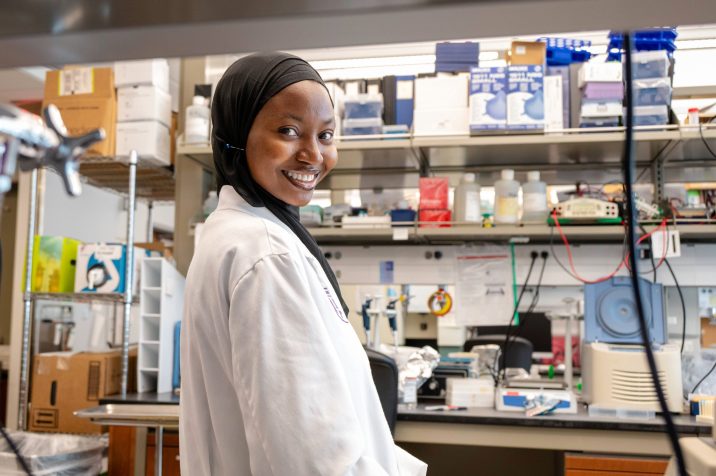
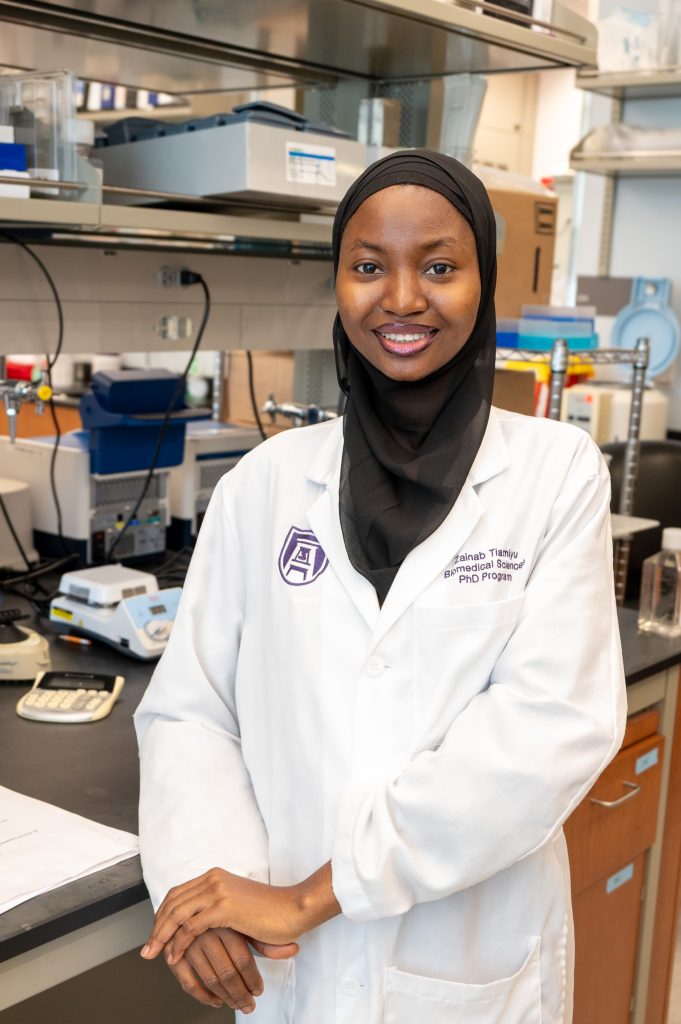
An on/off switch in immune cells to attack cancer tumors seems like something out of a science fiction novel, but it could be the key in helping the immune system fight cancer more effectively. This possibility is what is driving the research of Zainab Tiamiyu, a PhD candidate in the Department of Biochemistry and Cancer Biology at the Georgia Cancer Center at the Medical College of Georgia,
Her project, ‘The Role of Suv39h1 and Suv39h2-H3k9me3 in Myeloid Cell Differentiation, Tumor Microenvironment and Immune Evasion’,could lead to advancements in immunotherapy.
“As we all know, cancer is one of the leading causes of death worldwide, with many treatment options available. Although immunotherapy has transformed cancer treatment for many patients, not everyone responds to it, and some patients who initially benefit eventually develop resistance.”
The immune system is our body’s line of defense against bacteria and viruses, including cancer cells, however; there is a limit on its ability to destroy cancer on its own, as cancer can develop mechanisms to evade the immune system’s attacks. Immunotherapy helps strengthen or restore the immune system’s ability to recognize and destroy cancer cells There are multiple types of immunotherapies, and not all cancers can be treated with immunotherapy due to specific mutations in the genes or proteins, called biomarkers.
When it comes to success rates for immunotherapy, they are lower compared to other cancer treatment types. This is due to tumors developing ways to suppress or evade the immune system, making treatment less effective over time.
“These challenges are what inspired my current research and led me to investigate the epigenetic regulators SUV39H1 and SUV39H2. We believe these proteins may play an important role in regulating anti-tumor immune responses and could help improve the effectiveness of immunotherapy.”
Epigenetic regulators are enzymes, or in this case, proteins that control how genes are turned on or turned off without changing the DNA Sequence. They help determine how cells function and respond to their environment across our body. In cancer, epigenetic regulators can be altered, allowing tumors to grow, spread, and escape the immune system.
“SUV39H1 and SUV39H2 add a chemical tag called H3K9me3 to proteins known as histones, which help package DNA inside cells. This chemical tag can switch certain genes off. In immune cells, this process may influence whether the cells remain active against cancer or become less effective over time. By understanding how these proteins regulate immune cell function, we hope to identify new ways to restore anti-tumor immunity and improve the effectiveness of immunotherapy.”
Tiamiyu’s research is focused on colorectal cancer, but she believes that her findings could provide additional insights in developing new treatments for other types of cancer and also other diseases, such as autoimmune disease.
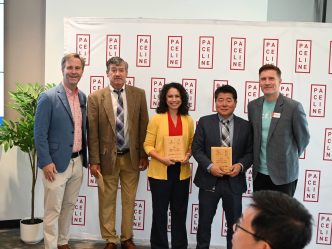
This work was awarded grant funding from Paceline 2025. Since 2019, Paceline has raised $2 million for innovative cancer research and has funded over 30 researchers and their projects at the Georgia Cancer Center. We encourage you to join us on PaceDay 2026, scheduled for October 4, and help us set the pace to end cancer. You can sign up to ride, walk, or volunteer, by visiting their website.



“Beyond financial support, PACELINE sends a powerful message that the community believes in scientific research and the people working to improve cancer outcomes. That encouragement motivates researchers and helps accelerate discoveries that may ultimately benefit patients and families affected by cancer. We are extremely grateful for that support, and it plays a vital role in helping us move this work forward.”


 Chris Curry