 Lindsey Morris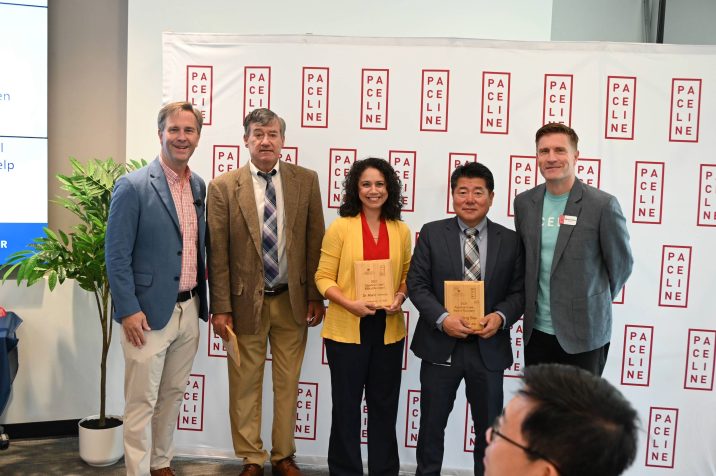
Rural communities in the United States face significant healthcare barriers compared to urban areas, including transportation challenges, fewer healthcare facilities, and financial obstacles. This makes cancer prevention, detection, and treatment more difficult.
“We examined mortality rates for breast, prostate, lung, and colorectal cancer in Georgia and found that residents of several rural counties have elevated mortality rates from these cancers,” said Sejong Bae, PhD, professor and chair of Biostatistics, Data Science, and Epidemiology at the School of Public Health.
To combat these elevated rates, Bae, along with Steven S. Coughlin, PhD, professor of Biostatistics, Data Science, and Epidemiology at the School of Public Health, and Marlo Michelle Vernon, PhD, Associate Professor of the department of Health Management, Economics & Policy at the School of Public Health, have teamed up on their project ‘Nurse Patient Navigator Intervention to Improve Cancer Survivorship in Rural Greensboro, Georgia’.
“The importance of this project lies in its ability to close the persistent gap between what we know works and what reaches communities, particularly in rural Georgia. While many effective interventions exist, they often fail to achieve real-world impact because they are not systematically planned for implementation or adapted to local contexts.”
Marlo Michelle Vernon, PhD
The team plans to address the gap in care by adapting navigation models originally designed for urban care centers, to rural care centers, by using The Consolidated Framework for Implementation Research (CFIR) approach. CFIR is used to predict and explain barriers and facilitators to implementation success.
“This project is going to address the limited clinical infrastructure and fragmented care systems to improve access to survivorship care and care coordination, while also reducing health disparities related to geography and socioeconomic factors. Ultimately, the aim is to create a sustainable model that can improve outcomes for rural cancer survivors across the state,” said Bae.
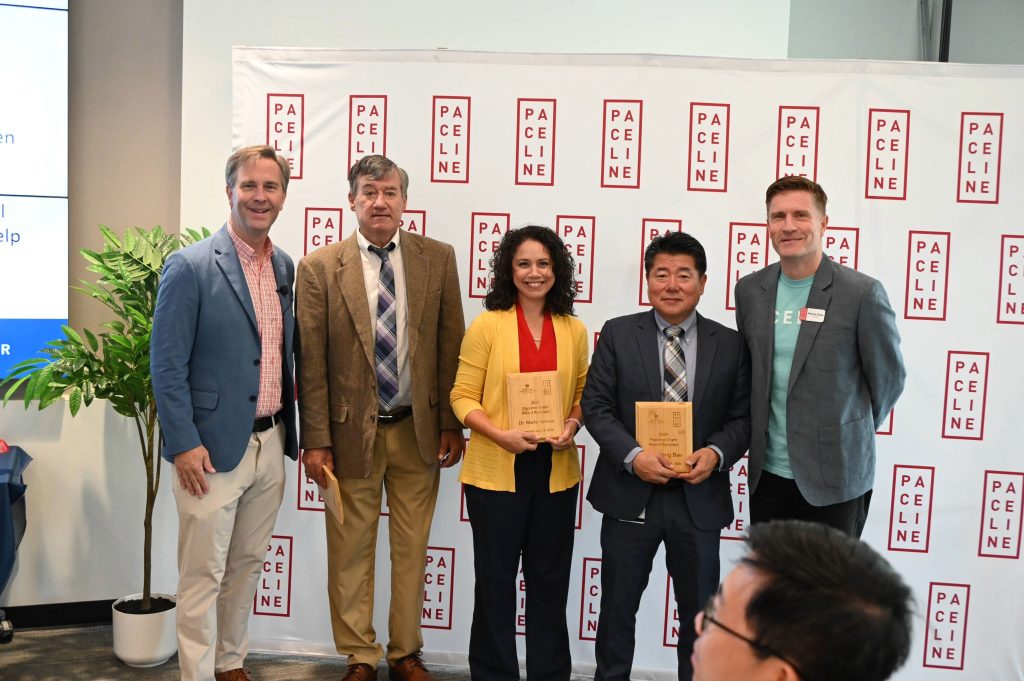
Bae, Coughlin, and Vernon selected Greene County in Georgia to be their site for this feasibility study, where they will be evaluating a nurse-led patient navigation intervention with the goal to improve cancer survivorship care. To ensure not just feasibility, but also sustainability, the team is working alongside community partners and stakeholders to create solutions that reflect the local priorities, realities, and barriers of the county.
“By leveraging our role as connective tissue across organizations, providers, and community groups, this project will create a coordinated, sustained approach to improving health outcomes. The result is not a one-time program, but a durable infrastructure that continues to benefit communities long after the project ends,” said Vernon. “Paceline’s funding gives the foundation to do this work the right way, the first time.”
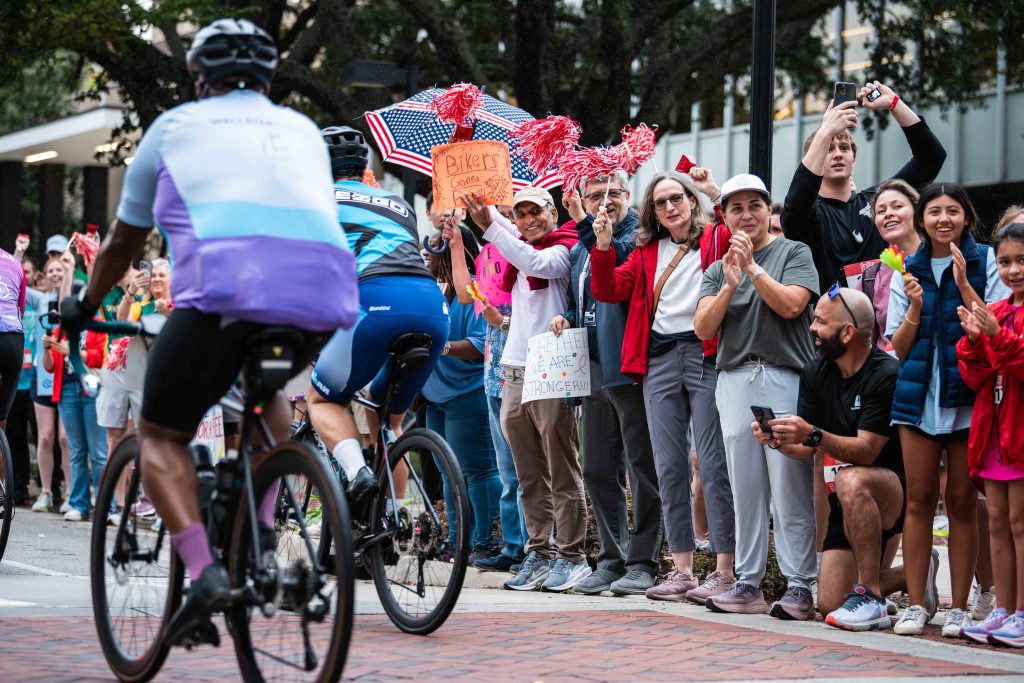
Since 2019, Paceline has raised $2 million for innovative cancer research and has funded over 30 researchers and their projects at the Georgia Cancer Center. Join us on PaceDay 2026, scheduled for October 4, and help us set the pace to end cancer. You can sign up to ride, walk, or volunteer, by visiting their website.



 Chris Curry