
 Chris Curry
In a groundbreaking study, researchers have unveiled a novel method for selectively eliminating hard-to-target proteins, paving the way for new treatments for diseases like cancer.
“In the ever-evolving landscape of medical research, the challenge of targeting certain proteins—often labeled as “undruggable”—has long frustrated scientists and clinicians alike,” said Dongwen Lyu, PhD, an assistant professor at the Georgia Cancer Center and Medical College of Georgia. “However, a recent study in my lab introduced a pioneering approach that could change this narrative, enabling a more precise method of protein degradation that holds promise for advancing cancer therapies.”
At the heart of this innovation is a technique known as Targeted Protein Degradation (TPD), which Lyu and his research team use as they leverage specially designed molecules called proteolysis-targeting chimeras (PROTACs). These molecules act like a molecular pair of scissors, marking specific proteins for destruction by the cell’s natural waste disposal system, known as the ubiquitin-proteasome system (UPS). Highlighting the growing clinical potential of this approach, the FDA recently approved the first PROTAC molecule, vepdegestrant, for the treatment of breast cancer patients.
Historically, the use of PROTACs has been limited by the availability of effective targeting agents for many proteins in the human body. This scarcity has hindered researchers’ ability to assess and degrade these proteins effectively.
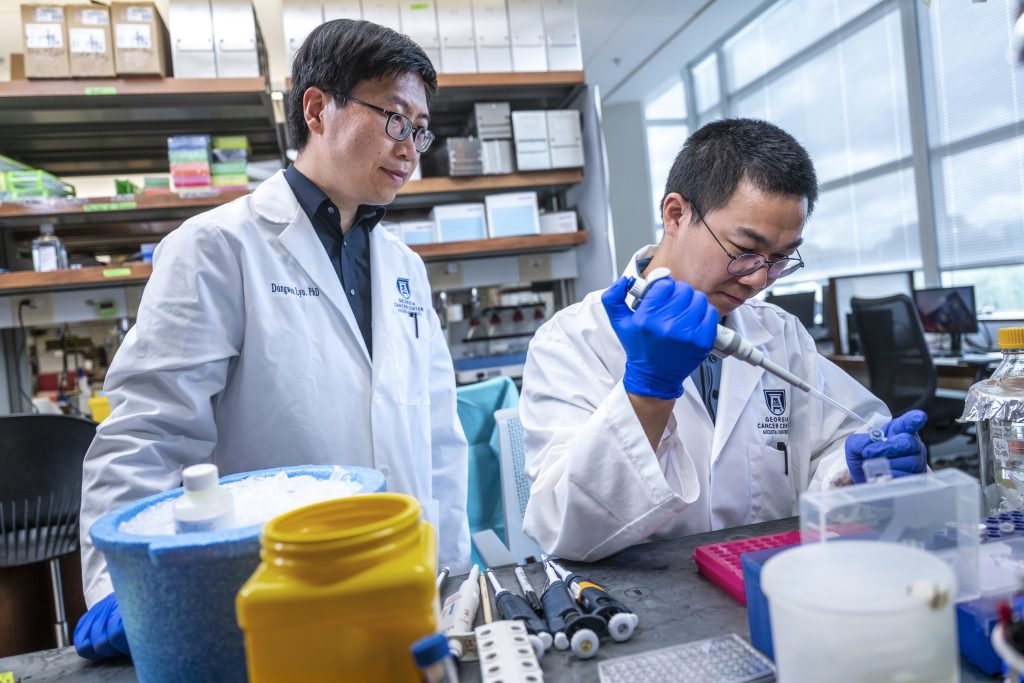
To overcome these obstacles, Lyu developed a new class of PROTACs, termed polyhistidine-targeting PROTACs, or polyHisTACs. By utilizing a small tag made of histidine—an amino acid common in protein structures—the scientists can effectively target and degrade proteins that have long resisted conventional drug interventions.
“In our laboratory tests, polyHisTACs demonstrated remarkable efficacy, successfully degrading two critical proteins associated with cancer: BRD4, known for its role in promoting cancer cell growth, and PSPC1, a protein linked to certain forms of acute myeloid leukemia (AML),” Lyu said. “The study revealed that these new PROTACs could achieve efficient degradation of these proteins within mere hours.”
This development is a significant leap forward in our ability to target proteins that have been historically difficult to target with medications. With polyHisTACs, Lyu and his team believe they now have a reliable means of assessing the degradability of proteins that lack traditional binding sites for drugs.
As the landscape of cancer treatment continues to evolve, the implications of this research are profound. By providing a new avenue for the development of therapies against previously elusive targets, polyHisTACs could significantly enhance our understanding of protein functions in disease and inform future drug discovery efforts.
Researchers are optimistic that this innovative approach will lead to more effective treatments for a variety of conditions, particularly in oncology. As the scientific community examines the potential of polyHisTACs, one thing is clear: the fight against cancer may have gained a powerful new ally.


 Lindsey Morris