 Lindsey Morris
When it comes to diagnosing cancer, often it is found due to a list of symptoms, or even genetic testing, but sometimes, it is complete luck.
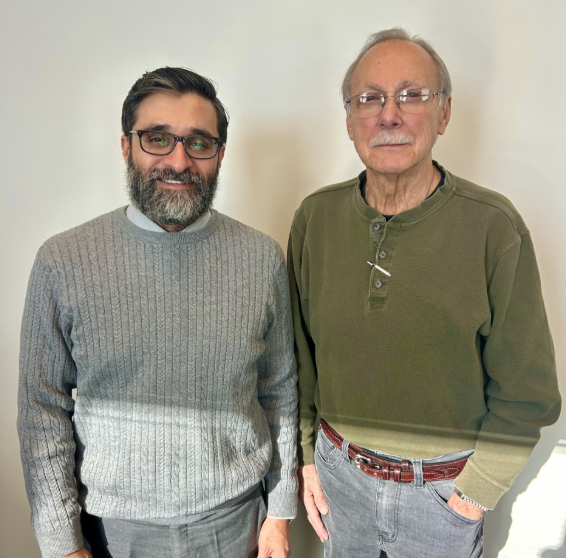
This was the case for Larry Abney, who received news that a nodule had been found while undergoing treatment for his heart.
“It was completely by chance. I lucked out,” said Abney.
Abney, a retired police officer from Dallas, had done required yearly physicals due to his job, but decided to continue them once he settled down in Aiken. During a regular physical, they learned about his AFib and atrial flutter, along with an enlarged aorta.
He had come close to open heart surgery, but his medical team determined that it could be avoided with other treatments and surgeries, along with additional monitoring. This additional monitoring of his aorta lead to the nodule discovery.
“One other patient of mine got into a car accident. As part of her intake, they did a scan for her and incidentally found that she had a mass in her lung,” said Giri Raval, MD, an associate professor in the Department of Medicine at the Medical College of Georgia at Augusta University, medical oncologist at the Georgia Cancer Center at WellStar MCG Health’s Lung Cancer Program, and Abney’s current doctor. “It happens more than one would think.”
When they relayed their discovery to Abney, he was in shock, but his concerns went straight to his wife and how she would react.
“I just told her, I said, you can’t let this drive your life,” said Abney when asked about how he handled telling her the news. “I felt like if I could whip the cardiac problems, I could beat cancer.”
Fortunately, Abney’s medical team quickly removed the nodule and had him undergo radiation to fully treat the area. He continued his check-ups and went seven years without any other cancer-related incidents.
Raval was concerned when he noticed Abney’s sudden weight loss during an appointment one day. He had suspicions that it might be cancer resurging, but the first biopsy came back negative. Despite the biopsy results, Raval was cautious to rule out cancer.
“With a biopsy, what happens is that we try to be minimally invasive. We usually do biopsy with a very fine needle. If there is a mass here, it must hit the cancer, which is surrounded by normal tissue. Sometimes there is a sampling error, and sometimes there is a location error,” said Raval.
He and his team continued to watch the area and continued their scans that showed the mass growing.
“I just called it chasing the cancer,” said Abney when he spoke of their journey to discovering what was going on with his health. He had the same suspicions as Raval that the cancer might have resurged.
Finally, on the third biopsy, they received their confirmation that the cancer had returned. While Abney and Raval were not thrilled that their suspicions were correct, it was a relief to know that they knew with certainty what the problem was, and that they could form a treatment plan together.
Raval had to consider Abney’s heart condition when developing a treatment plan and made the decision to put his heart’s health first versus risking possible cardiotoxicity.
“We decided that at that point, we were going to hold off on the treatment on the off chance that it can worsen his cardiac condition. I wanted to ensure that his heart workup was complete so that we had the best chance possible of successfully treating his cancer and keeping his heart healthy,” said Raval.
Abney kept a clear head throughout the wait for a diagnosis, and the start of his treatment plan, as he had plenty of experience with waiting due to his son’s own health problems.
“He had to have numerous surgeries until he was 16. I remember telling him that this is something we can handle. I give myself 30 minutes to feel sorry for myself and then it’s time to get back up and move on, and I would be a poor example if I didn’t follow what I said to him,” said Abney, looking back to both of his cancer diagnoses.
Once Abney’s heart health stabilized, they started on the treatment plan. They radiated the area where the cancer was and prescribed him medication that would decrease the chances of the cancer returning. Aside from a few side effects, Abney has been doing well with the treatment plan. Raval has hopes that this will keep the cancer at by going forward.
When asked what advice Abney would give to those who recently received a cancer diagnosis, he looked back to a memory with his stepson, Brian.
“He had been diagnosed with cancer, and I told him, ‘Son, just do the best you can do what they tell you to do. Don’t feel sorry for yourself. Don’t let it take your dignity away from you. You just keep going.”
If you or a loved one has been affected by a lung cancer diagnosis, you are not alone. LiveLung is a lung cancer support group that meets on the 2nd Tuesday of each month here in Augusta. If you are not local, you can visit their website for more locations and virtual options.

 Chris Curry